
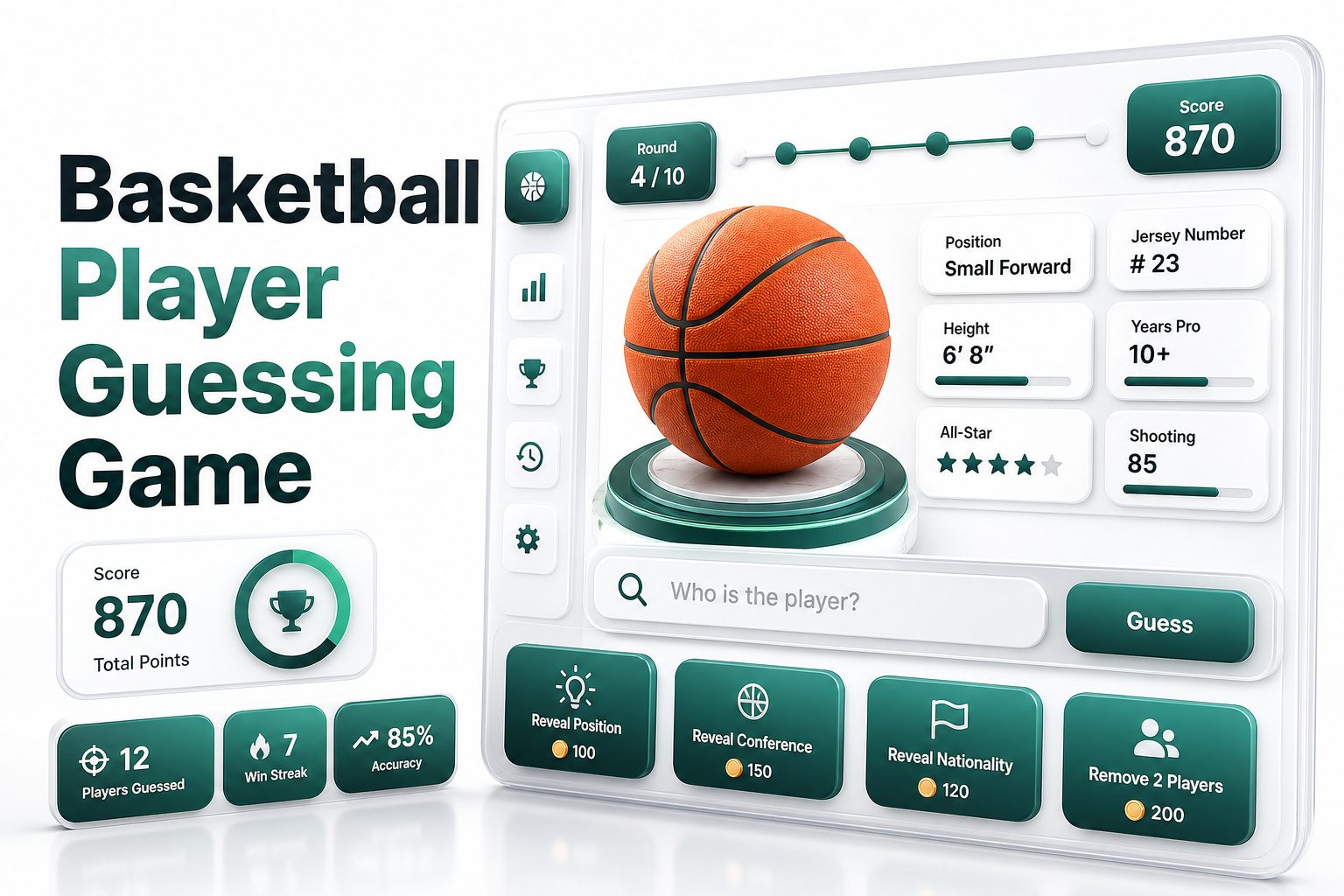
A basketball player guessing game turns player knowledge into a fast, social, and entertaining challenge. Fans use clues about teams, positions, stats, eras, jersey numbers, achievements, and playing style to identify the correct player before others do.
The format works because basketball fans remember players in different ways. Some recall signature moves, while others focus on championships, draft history, college careers, or advanced numbers. That variety keeps each round fresh and competitive.
For content creators, the game offers strong engagement potential. It fits blogs, social posts, livestreams, classrooms, fan communities, and party games. With the right structure, it can entertain casual fans while still challenging serious basketball followers.
Why This Game Appeals to Basketball Fans
Basketball has a deep player culture, which makes guessing games especially effective. Fans connect players with highlights, rivalries, nicknames, sneakers, awards, and unforgettable playoff moments. Each clue can trigger a different memory.
The game also rewards both knowledge and reasoning. A player may not be obvious from one clue, but several details can guide the answer. This creates tension without making the experience feel random or unfair.
Another reason fans enjoy it is replay value. New players enter the league every season, while legends remain part of fan conversations. A well-made game can mix generations and keep people coming back for new rounds.
Game Elements That Keep Players Engaged
- Balanced clues that begin broad and become more specific
- Player pools grouped by era, league, team, or difficulty
- A fair scoring system that rewards early correct answers
- Visual clues such as silhouettes, jerseys, stat lines, or career paths
- Timed rounds that keep the pace active without feeling rushed
- Occasional trick rounds based on role players or forgotten stars
How a Basketball Player Guessing Game Works
Most versions begin with a hidden player and a sequence of clues. Players make guesses after each clue, earning more points when they answer earlier. The best formats allow guessing without punishing thoughtful attempts too harshly.
Clues can include height, position, draft year, teams played for, All-Star selections, scoring averages, championships, or a famous teammate. A strong clue set moves from general information toward details that make the answer clear.
Digital versions often add color feedback, comparison hints, or limited attempts. Offline versions may use cards, score sheets, or host-read clues. Both styles work well when the rules are simple and the answers feel earned.
Building Clues That Feel Fair
A fair clue gives players a real path toward the answer. It should not rely only on obscure facts unless the round is clearly marked as difficult. Good clues help players narrow the field step by step.
Start with categories that create useful boundaries, such as conference, decade, position, or draft range. Then move toward memorable career facts. This structure prevents players from feeling lost during the opening moments of a round.
Avoid clues that could match too many players for too long. If a clue says the player was a guard in the 2010s, it needs stronger follow-up details. Precision keeps the game enjoyable and credible.
Clue Types That Work Well
Career Path Clues
Career path clues are among the most useful because they guide players through team history. Listing franchises in order can quickly separate stars, journeymen, and role players while still leaving room for careful thinking.
Stat Line Clues
Stat clues work best when they are recognizable but not instantly obvious. A points-per-game average, rebounding peak, assist title, or shooting percentage can help fans connect numbers with playing identity.
Achievement Clues
Awards, selections, titles, and milestone moments create strong clues. These details should be placed later in the clue order if they reveal the answer too quickly, especially for Hall of Fame players.
Choosing the Right Player Pool
The player pool shapes the difficulty and tone of the game. A casual audience may prefer current stars and all-time legends, while advanced fans may enjoy sixth men, international players, defensive specialists, and short-prime stars.
A balanced pool should include different positions, eras, franchises, and fame levels. If every answer is a superstar, the game becomes predictable. If too many answers are obscure, players may stop trusting the challenge.
For a blog or website, player pools can become separate game modes. You could create pages for NBA legends, current players, rookies, playoff heroes, or team-specific editions. Internal link: NBA trivia game guide.
Difficulty Levels for Better Gameplay
Easy rounds should focus on recognizable names, famous teams, and widely known achievements. These rounds are useful for new players, mixed groups, and quick social media challenges where the goal is broad participation.
Medium rounds can include retired stars, strong role players, and players known for one major skill. These rounds reward regular fans who follow the league beyond headlines and highlight reels.
Hard rounds should use deeper clues, older players, bench contributors, international careers, or statistical quirks. The key is labeling the challenge clearly, so players know they are entering a tougher test.
Sample Difficulty Structure
Easy Level
Use active stars, MVP winners, champions, and players with famous nicknames. Clues can include All-Star appearances, current team, position, and a signature achievement that most basketball fans would recognize.
Medium Level
Use respected starters, former All-Stars, strong defenders, elite shooters, and memorable playoff performers. Clues may include draft slots, team changes, career averages, or a notable postseason moment.
Hard Level
Use older players, short-tenure stars, specialists, backup guards, overseas standouts, or players remembered by dedicated fan bases. Clues should still be logical and not depend only on trivia footnotes.
Scoring Systems That Add Strategy
A simple scoring system keeps the game easy to manage. Awarding more points for earlier guesses encourages risk, while lower points for later guesses keeps everyone involved. This structure works well for both solo and group play.
One common method gives five points after the first clue, then decreases by one point after each new clue. This creates pressure without making late answers worthless. Players must decide when confidence is high enough.
For competitive groups, bonus points can reward streaks, perfect rounds, or correct answers without hints. Keep bonuses limited, though. Too many scoring rules can distract from the main fun of identifying the player.
Using Visual Clues Effectively
Visual clues can make a basketball player guessing game more dynamic. A blurred player image, jersey crop, shot chart, or team timeline can add variety. These clues work especially well in digital articles or interactive pages.
Silhouettes are useful, but they should not be the only format. Some players have recognizable body shapes or hairstyles, while others do not. Mixing visual and text clues creates a more balanced experience.
Images should be clear enough to support the round without giving away the answer instantly. Cropped details, uniform colors, or partial stat cards can create a strong challenge while keeping the page visually appealing.
Visual Formats to Try
Jersey Clue
Show a cropped jersey number, color scheme, or uniform era. This works well for fans who remember team designs and player-number combinations across different seasons.
Career Map
Display a sequence of team logos without naming the player. This format rewards fans who know trades, free agency moves, and late-career stops.
Stat Card
Present a compact stat profile with points, rebounds, assists, draft year, and position. This gives players enough information to reason through the answer.
Writing Clues for SEO Content
A blog article about a guessing game should serve both readers and search intent. People searching for this topic may want rules, examples, tools, clue ideas, or a playable experience. The content should address those needs clearly.
Use related phrases naturally, such as NBA player trivia, basketball guessing challenge, sports quiz game, player clue game, and basketball trivia questions. These terms support the main topic without making the writing feel repetitive.
SEO content works best when it gives practical value. Include formats, examples, difficulty guidance, and hosting tips. A reader should leave with enough information to run or improve the game immediately.
Hosting the Game With Friends
When hosting in person, keep the rules brief and the rounds moving. A host can read clues one at a time, pause for guesses, and track scores. Short rounds help maintain energy across the group.
Teams can make the game more social. Pairing casual fans with serious fans creates better balance and more conversation. It also reduces the pressure on players who may not know every roster detail.
Use a mix of old and current players to keep everyone involved. Younger fans may know today’s stars, while longtime fans may shine during legend rounds. That variety makes the room feel included.
Hosting Tips for Smooth Rounds
- Set the number of clues before the game begins
- Decide whether wrong guesses remove players from the round
- Use a visible scoreboard for group energy
- Rotate categories so one type of fan does not dominate
- Keep disputes simple by relying on one trusted source
- End with a bonus round for close scores
Creating a Digital Version
A digital version can turn the game into an interactive experience. Players may type answers, select from multiple choices, or receive color-coded hints. The best version depends on the audience and the platform.
Multiple-choice rounds are easier for casual players and mobile users. Free-answer rounds feel more challenging and rewarding but require flexible spelling support. A smart game accepts common name variations and avoids frustrating users.
For websites, performance matters. Fast loading, clear buttons, readable clues, and mobile-friendly layouts affect engagement. A clean interface is more valuable than unnecessary animations that slow the experience.
Common Mistakes to Avoid
One common mistake is making clues too obscure too early. A clue should create movement toward the answer, not leave everyone guessing blindly. Difficulty should come from smart sequencing, not vague information.
Another issue is repeating the same type of clue every round. If every answer starts with height and position, players may lose interest. Rotating stats, achievements, teams, images, and career details keeps the format lively.
Creators should also avoid outdated or inaccurate information. Player teams, awards, and career totals can change over time. If the game includes active players, refresh the data regularly to keep trust with readers.
Using Stats Without Making the Game Dry
Stats are powerful, but they need context. A career average may not mean much by itself unless it connects to role, era, or peak performance. The best stat clues feel informative and playable.
Use rounded numbers when precision is not necessary. Saying a player averaged around twenty points during his prime can be easier to process than listing several decimal-heavy seasons. Clarity matters during timed rounds.
Advanced stats can work for experienced fans, but they should be used carefully. Defensive rating, usage rate, or true shooting percentage may interest deeper audiences, yet they can alienate casual players if overused.
Content Formats for Blog Growth
A basketball guessing article can become part of a larger content cluster. You can publish game rules, clue lists, player quizzes, team editions, and printable cards. Each page can target a different search angle.
Evergreen content works well because fans repeatedly search for trivia games. Updating pages before the playoffs, draft, or All-Star weekend can help maintain relevance. Seasonal refreshes also give returning readers a reason to come back.
Interactive posts often earn longer session times than static articles. Adding a short playable section, downloadable clue sheet, or leaderboard idea can make the article more useful. Internal link: basketball quiz ideas.
Content Ideas for Related Pages
NBA Legends Guessing Game
This page can focus on historic players, championship runs, iconic rivalries, and Hall of Fame careers. It is a strong fit for readers who enjoy league history.
Current NBA Player Quiz
This format can focus on active rosters, recent trades, award races, and modern statistics. It should be updated often because player movement changes quickly.
Team-Based Player Challenge
A team edition can target fan bases directly. Pages for Lakers, Celtics, Warriors, Bulls, or Knicks players can attract highly specific search traffic.
Making the Game Inclusive for Casual Fans
A good game does not make casual fans feel excluded. Even when the subject is basketball knowledge, the structure can give every player a chance. Clear hints and mixed difficulty levels help maintain broad participation.
Include recognizable clues beyond statistics. Nicknames, college teams, shoe lines, famous teammates, or playoff moments may be easier for casual fans than career totals. Different clue styles welcome different kinds of memory.
Hosts can also offer team play, hint passes, or category choices. These small adjustments make the game more comfortable without lowering the quality. The goal is lively competition, not a test that only experts can enjoy.
Adding Personality Without Losing Accuracy
A strong basketball trivia voice should sound confident, clear, and fan-aware. Short commentary between clues can add energy, but it should not replace accurate facts. The player data still needs to be correct.
Avoid overhyping every answer. Not every player is an icon, legend, or generational talent. Describing role players with honest respect makes the content feel more human and reliable.
Personality can come from clue framing. Mentioning a player’s smooth midrange game, defensive toughness, clutch shooting, or transition speed adds color. These details help players remember why the answer matters.
Ways to Add Flavor
Playing Style Notes
Describe how the player looked on the court, such as pace, footwork, shooting range, passing style, or defensive habits. This adds texture beyond numbers.
Era References
Mention the basketball environment around the player. Pace, defensive rules, spacing, and team strategy can help readers place the clue in the right period.
Fan Memory Hooks
Use moments that fans remember, such as a playoff shot, trade, rivalry, dunk contest, or breakout season. These hooks make the round more memorable.
Mobile-Friendly Game Design
Many users will play on phones, so the layout needs to be simple. Clues should be readable without zooming, buttons should be easy to tap, and answer fields should not feel cramped.
Avoid long clue blocks during gameplay. Short lines are easier to scan, especially when players are thinking quickly. A clean clue card with one strong detail at a time works better than a dense paragraph.
Mobile games should also load quickly. Compressed images, simple navigation, and stable layouts matter. A player guessing game loses momentum when users wait too long between rounds or struggle with small controls.
Turning the Game Into Social Content
Short-form social posts are ideal for quick guessing rounds. A cropped image, three clues, and a comment prompt can drive replies. Fans enjoy proving their knowledge publicly, especially when the answer feels just within reach.
Carousel posts can reveal clues one slide at a time. This format works well because users swipe through the challenge naturally. The final slide can show the answer with a short career note.
Video formats can also work. A timer, clue sequence, and final reveal create tension. Keep each round short, and use captions because many users watch without sound.
Social Post Formats
Three-Clue Challenge
Post three clues and ask followers to guess the player before the reveal. This format is quick, repeatable, and easy for fans to share.
Blurred Image Reveal
Start with a blurred action photo or jersey detail, then sharpen it across slides or seconds. This adds visual tension to the guessing process.
Stat Line Mystery
Share a stat profile without the name. Fans must connect numbers, position, era, and team context to identify the player.
Monetization and Audience Value
A basketball player guessing game can support audience growth without feeling overly commercial. It can increase page views, repeat visits, newsletter signups, and social engagement when it gives fans a reason to return.
Downloadable clue packs, printable party cards, premium quiz sets, or team-specific editions can become valuable products. The offer should save time for hosts, teachers, creators, or fan groups who want ready-made rounds.
Advertising can work, but it should not disrupt gameplay. Too many popups or interruptions can weaken the experience. The game should remain fast, readable, and enjoyable from the first clue to the answer reveal.
Keeping the Game Updated
Basketball changes quickly through trades, injuries, awards, retirements, and breakout seasons. Any game involving current players should be reviewed regularly. A clue that was accurate last year may become confusing after a major roster move.
Create a simple update schedule around key NBA moments. Review content after the trade deadline, playoffs, draft, free agency, and opening night. These points often change player context and search demand.
For retired players, updates are less frequent but still useful. Hall of Fame selections, anniversary content, documentaries, and record changes can make older player pages relevant again.
Accuracy Checklist
- Confirm current teams for active players
- Check awards, All-Star selections, and championships
- Verify draft year, pick number, and college or overseas background
- Review spelling and accepted answer variations
- Update clue difficulty after major career changes
- Remove clues that became misleading after trades or retirements
Conclusion
A basketball player guessing game works because it blends memory, logic, competition, and fan culture into one simple format. Strong clues, fair difficulty, accurate data, and varied round types can turn a basic trivia idea into a repeatable experience.
The best versions respect both casual fans and serious basketball followers. They use player stories, stats, achievements, visuals, and team history in a way that feels lively and fair. That balance keeps players engaged across multiple rounds.
For writers and site owners, the basketball player guessing game is also strong content. It can support SEO, social sharing, internal linking, and interactive engagement while giving readers practical entertainment they can use right away.
FAQ
What is a basketball player guessing game?
A basketball player guessing game is a trivia challenge where players identify a hidden basketball player using clues. These clues may include teams, stats, awards, position, draft history, jersey number, playing style, or memorable career moments.
How many clues should each round include?
Most rounds work well with four to six clues. This gives players enough information to think through the answer without dragging the pace. Early clues should be broad, while later clues should make the player easier to identify.
Can casual fans enjoy this game?
Yes, casual fans can enjoy it when the game includes clear hints, recognizable players, and mixed difficulty levels. Team play, multiple-choice answers, and visual clues can make the format more welcoming without removing the challenge.
What makes a clue fair?
A fair clue helps players narrow the answer in a logical way. It should be accurate, relevant, and specific enough to guide guesses. The best clue sets move from broad context toward details that strongly point to one player.
Is this game good for SEO content?
Yes, it can work well for SEO because fans search for trivia games, NBA quizzes, and player challenges. A useful article can include rules, examples, clue ideas, difficulty levels, and related internal links for deeper engagement.
0 Comments